Saniya Gazala
In short
A search intent change happens when a competitor rewrites an existing page for a different purpose, for example turning a how-to guide into a 'best tools' comparison. Watch the 'last updated' dates in their sitemap, then compare the page's title and headings with the previous version. If the angle moved from learning to buying, answer with your own comparison or buying page on the same topic.
New blog posts are easy to notice. Rewritten pages are not. One of the biggest content moves a competitor can make is changing what an old page is for, and it usually happens without anyone noticing.
What a search intent change looks like
Same page, new job
Imagine a competitor has a guide called "A 10-point checklist for your first competitive intel program". It ranks well, and people read it to learn.
One week, the same address has a new title: "The 10 best competitive intelligence tools in 2026, compared". The headings are now product names and a pricing table. Same page, same links pointing to it, but a new job. It used to teach, and now it sells.
That is a shift from informational intent (people learning) to commercial intent (people choosing a tool). The competitor is now in front of buyers who are ready to decide, using authority the page already had.
Why most teams miss it
When I tracked competitors by hand, I compared lists of their pages week to week. A rewritten page has the same address, so it looked like nothing had changed. At best, we noticed it had "come back" and assumed it was "optimized". Nobody opened it to see how.
How to catch it
- Watch the sitemap dates. Most sites publish a sitemap at
/sitemap.xml, with a "last updated" date for each page. A date that moves on an old blog post or guide is your first clue. - Save the page outline. For each important content page, keep its title, meta description and headings. That is enough to see the angle without storing the whole page.
- Compare before and after. When the date moves, read the outline again. Did the title gain words like "best", "vs", "alternatives" or "pricing"? Did the headings turn into product names? That is the shift.
- Ignore mass updates. Some sites stamp every page with a new date whenever they redeploy. If hundreds of dates move at once, it's not a rewrite.
What to publish in response
- If you have no page for that buying question, write one. Make it an honest comparison and lead with what makes you different.
- If you have one, update it and make sure it covers the same options the competitor now lists.
- Brief sales, because buyers who read that page will show up with its framing.
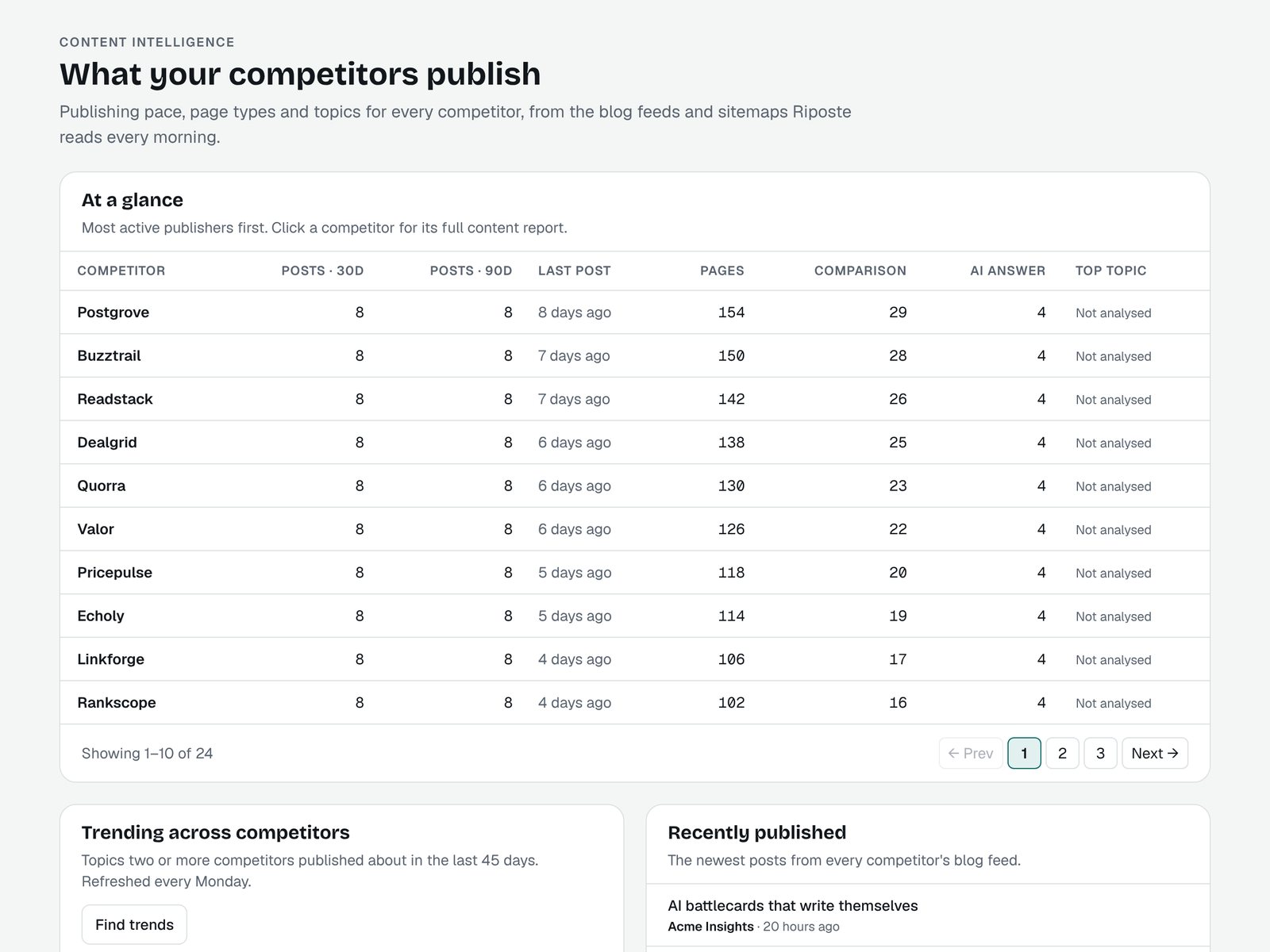
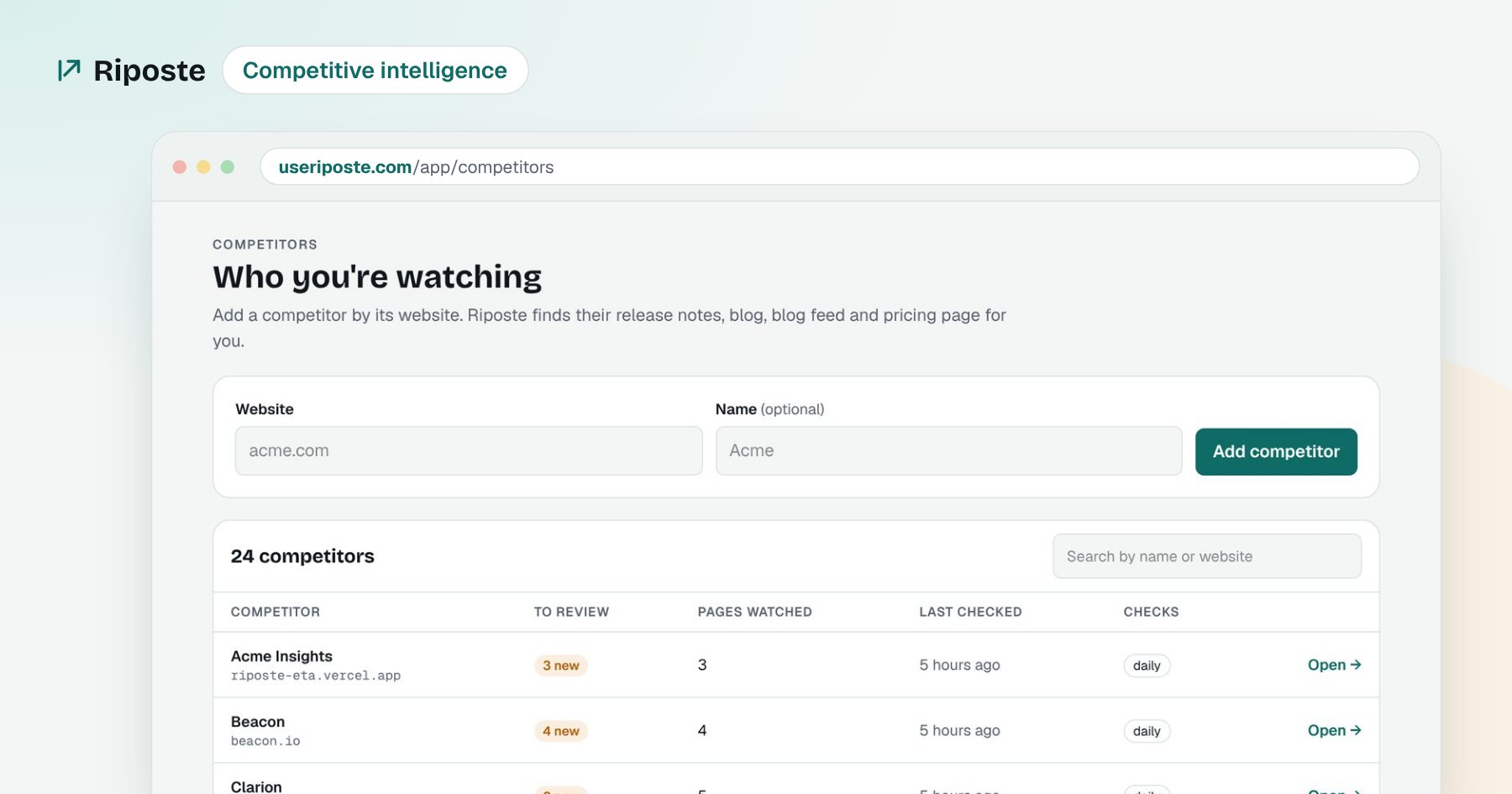
Riposte does these steps automatically. It watches competitor sitemaps, compares page outlines, flags a rewrite with the before and after, and suggests the page to publish in response. I wrote more about tracking competitors as a weekly system:
The bottom line
When a competitor rewrites an old guide into a "best tools" page, they move in front of buyers who are ready to choose. Watch sitemap dates and page outlines, and answer with an honest page of your own.
Frequently asked questions
What is search intent?
Search intent is what a person wants when they search: to learn something (informational), to compare options before buying (commercial), or to buy or sign up (transactional). A page ranks best when it matches that intent.
Why would a competitor rewrite an old page?
An old guide that already ranks and has links is a cheap way to reach buyers. Rewriting it into a comparison or 'best tools' page keeps the page's authority but points it at people who are ready to choose.
How do I see when a competitor page was updated?
Most sites list a 'lastmod' date for each page in their sitemap at /sitemap.xml. When that date moves, open the page and compare its title, description and headings with the earlier version.
What should I do when I find an intent change?
Check whether you have a page for the same buying question. If not, publish one. If you do, update it so it answers the comparison honestly and leads with what makes your product different.
What tools can track competitor content changes?
Tools that check competitors' sitemaps and blog feeds on a schedule can flag new and rewritten pages. Riposte reads them every morning and flags pages whose angle changed, such as a guide turned into a comparison.
How do I know if a competitor is targeting my keywords?
Check whether their new or rewritten pages use your main keywords in the title, headings and URL, then look the pages up in an SEO tool to see what they rank for. A changed page title is often the first sign.
How often should I check competitor content?
Weekly is enough for most teams, and daily if content is a main channel in your market. Check the competitor pages that already rank well first, because rewrites of those matter most.
Can a competitor's rewritten page hurt my rankings?
Yes, if their new page answers the buying question better than yours. Search engines rank the page that best matches what the searcher wants, so you need a page that matches it too.
How do I respond to a competitor's comparison page?
Publish or update your own honest comparison page for the same question, lead with who each product suits, and keep prices and features current. A fair page earns more trust than one that only praises you.
Can I automate competitor content monitoring?
Yes. A monitoring tool can read sitemaps and blog feeds daily, compare pages with their last version and alert you to real changes. Riposte does this and can turn a change into a content brief for your response.